

Second Class Queer at Riverside Studios is a sharp, intimate solo performance written and performed by Kumar Muniandy. Set during a fast-paced gay speed-dating night in Berlin, the show follows Krishna, a Tamil-Malaysian man, as he encounters a series of wildly different men, each conversation peeling back another layer of identity, belonging and unspoken grief. Funny, direct and quietly confrontational, the piece blends humour with personal storytelling to explore what it means to move through spaces where you’re never quite seen as equal.

The moment that lands first is the simplest: Krishna sits across an invisible table, shifting his posture slightly as the “next date” arrives. With just a tilt of the head and a change in tone, a new character appears confident, awkward, patronising, or curious. There’s no costume change, no prop, just timing and presence. It’s a small theatrical device, but it carries the entire structure of the show.
What works immediately is the rhythm of these encounters. Each “date” is short, almost clipped, but loaded with detail: a comment about race, a joke that lands slightly wrong, a moment of silence that stretches just long enough to feel uncomfortable. When one character insists he “doesn’t see colour,” the line lands not as a cliché but as a lived frustration, because Krishna’s stillness afterwards says more than any rebuttal could.

Muniandy’s performance holds everything together. He moves fluidly between voices and emotional states, letting humour sit alongside sharper moments without forcing a shift. A playful exchange can turn into something more reflective within seconds, often anchored by a small physical gesture, a pause before speaking, a glance away, a tightening of the shoulders. These details keep the piece grounded even as it moves quickly between perspectives.
The structure, a sequence of speed-dating conversations, gives the show its pace, but also its weight. As the encounters build, they begin to overlap in meaning, revealing patterns in how Krishna is perceived and treated. The repetition doesn’t feel redundant; it accumulates, creating a sense of emotional pressure that quietly intensifies as the performance goes on.

That pressure matters because the piece is not only about one man’s bad dates. It shows how quickly desire, rejection, grief and prejudice can sit on top of each other. Muniandy is brave in the way he lets the audience into those encounters, but also into the personal losses and life stories sitting underneath them.
The show makes it hard to pretend that racism and homophobia are separate, simple problems, or that queer spaces are automatically free from the same hierarchies found everywhere else. What comes through most strongly is how systemic it all is: racism within the gay community, homophobia beyond it, and the wider global shift still needed before anything like real progress can happen.
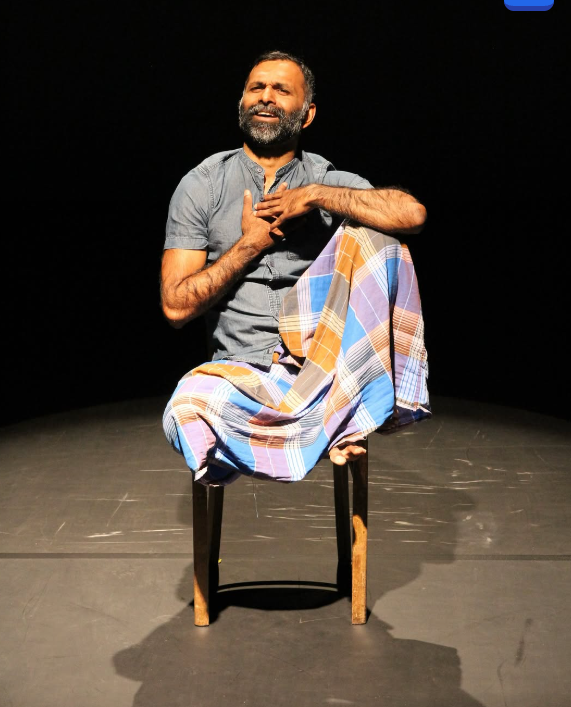
Second Class Queer succeeds because it trusts simplicity. Through small shifts in voice, posture and silence, it builds a layered portrait of identity and belonging that feels immediate and honest. It doesn’t need spectacle, just a performer, a series of encounters, and the willingness to sit with what’s being said.

