

You & It at King's Head Theatre: A Tender and Timely Musical That Asks Whether Love Can Survive Being Replicated
You & It, with a book by Seoeun Oh and Q Lee, music and lyrics by Q Lee, and directed by Esther Jun, is the kind of production that reminds you why musical theatre, when it takes genuine creative risks, can explore the questions that matter most to us right now more vividly than almost any other art form. Making its London debut at the King's Head Theatre, this award-winning South Korean musical, winner of Best Musical at the 13th Daegu International Musical Festival, arrives in Islington carrying both an irresistible premise and the emotional ambition to match it. Set in 2034, where artificial intelligence and human life have become quietly, routinely entwined, it is a love story, a grief story and a philosophical provocation all at once, running one hour and fifty minutes without interval and barely wasting a moment of it.
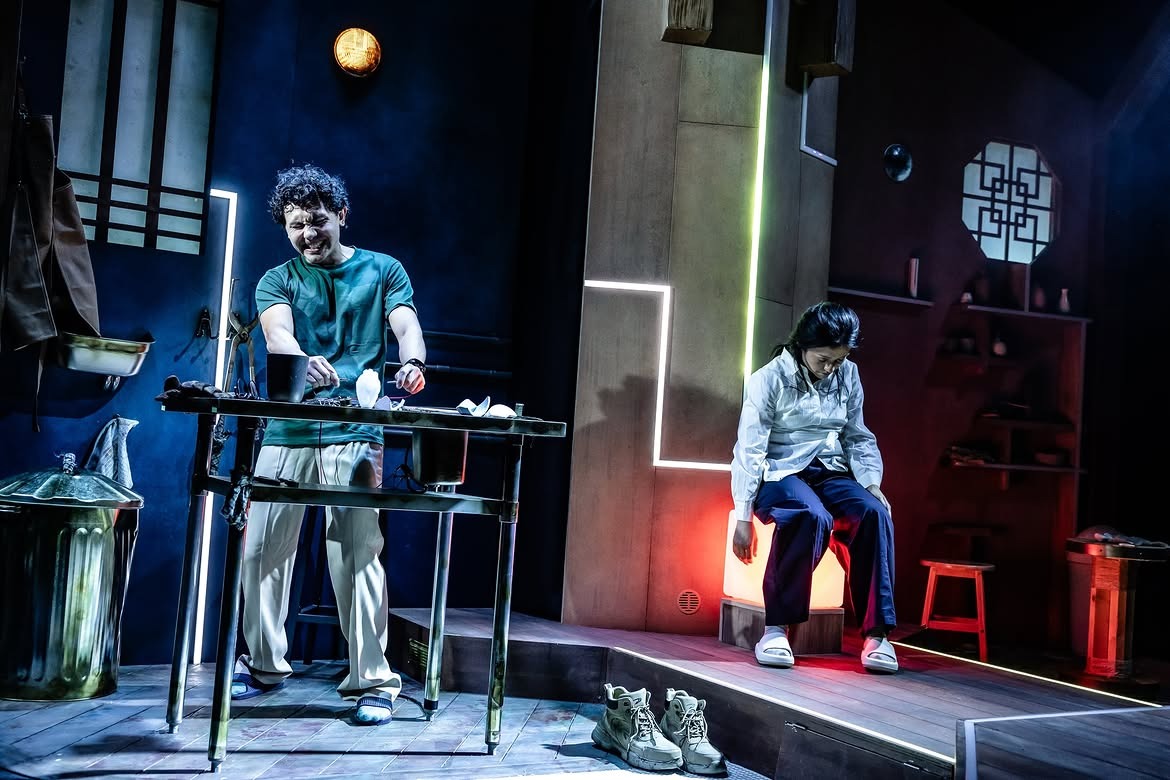
The world of the play establishes itself with a warmth and specificity that makes what follows all the more devastating. Mina is a ceramic artist. Gyujin works with metal. They are, the opening number tells us, living in paradise, and the production earns the sweetness of that word before it takes it away. When Mina is killed suddenly in an accident, Gyujin is left with a grief that the world around him has a technological solution for: An AI constructed from Mina's memories, personality, and image, offered to him as a way of continuing what was lost. A moment early in the play, Gyujin encounters the AI Mina for the first time, every instinct pulling him towards her while something else pulls equally hard in the opposite direction, establishing the central tension with quiet, unsettling precision. From here, You & It demonstrates a consistent and serious engagement with what it is actually asking: not whether the technology works, but whether it should.

What works especially well is the intelligence of Q Lee's score and the thematic coherence of the writing. The musical consistently explores the contrasts between old and new, perfection and imperfection, logic and creativity, memory and reality, using Mina's work as a ceramic artist as an elegant and recurring structural metaphor: The bowl she made by hand becoming a symbol of everything that is irreducibly human about their relationship. When that bowl is destroyed during an argument between Gyujin and the AI Mina, the moment lands with a weight that the production has been carefully building towards. The script trusts its audience to sit with the question rather than rushing to resolve it, which is one of the more admirable qualities in a musical that could easily have settled for sentiment.
Frances Mayli McCann and Zachary Pang anchor the production with performances that carry the full complexity of their respective impossible positions. Pang brings a genuine and grounded sincerity to Gyujin; his grief is legible without ever being performed, and the moments when it breaks through most unexpectedly are the production's most quietly affecting. McCann has the considerably more difficult task of making an AI feel real in a way that raises rather than answers the play's central question, and at her best she achieves exactly that: a presence that is close enough to human to be heartbreaking and just different enough to be unsettling. The relationship between them has real tenderness, and the moments when it becomes fully, uncomplicatedly touching are the ones the production earns most carefully.
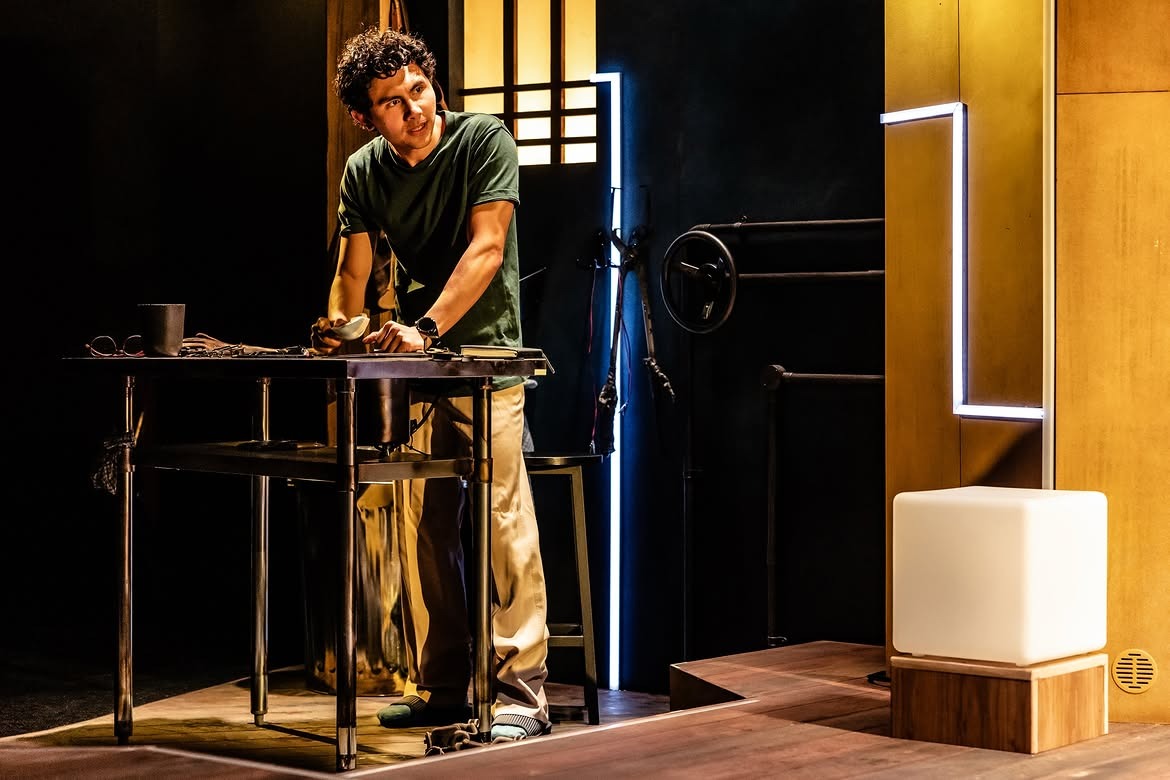
Bob Sterrett and Lu Herbert's design of a Korean home makes imaginative use of the King's Head's intimate space, grounding the near-future world in something domestic and recognisable. Jonathan Chan's lighting produces striking visual effects that speak to the play's interest in the boundary between the organic and the artificial, and Adrienne Quartly's sound design gives the production a textural richness that Minkyoung Park's work as AI Tech Director extends in directions that feel genuinely integrated into the storytelling rather than decorative. Amy Hsu's musical direction gives Q Lee's score clarity and emotional weight throughout.
One of the production's greatest strengths is the seriousness with which it approaches material that could easily have been treated as high-concept spectacle. The emotional territory of grief, memory, the nature of love, and what we mean when we say someone is irreplaceable is handled with genuine care, and the comedy that runs through the earlier, happier scenes gives the play exactly the right foundation for everything that follows. The warmth established in those opening sequences is not lost but transformed, which is what gives the later passages their power.

There are moments where Esther Jun's direction allows scenes to breathe where characters are left to sit with their uncertainty rather than being moved swiftly along, and these are among the production's most valuable sequences. You & It understands that the questions it is asking do not have clean answers, and it has the confidence to leave them open where a lesser production might rush to close them down.

