

Holy Fool at Park Theatre: One Wrong Note Could Cost Him Everything — and That is Exactly What Makes It Unmissable
Holy Fool, written by Rosalind Adler and Lea Sellers and directed by Kate Fahy, is the kind of production that reminds you why theatre, when handled with intelligence and moral seriousness, can illuminate history in ways that no documentary or biography ever quite manages. Presented by Park Theatre, Alexander "Sandy" Marshall and Wild Yak, this tense, darkly witty drama places celebrated Soviet composer Dmitri Shostakovich at the centre of one of the twentieth century's most disturbing paradoxes: The artist whose genius made him indispensable to the very regime that threatened to destroy him. It is poignant, gripping, unexpectedly funny, and could not feel more timely.
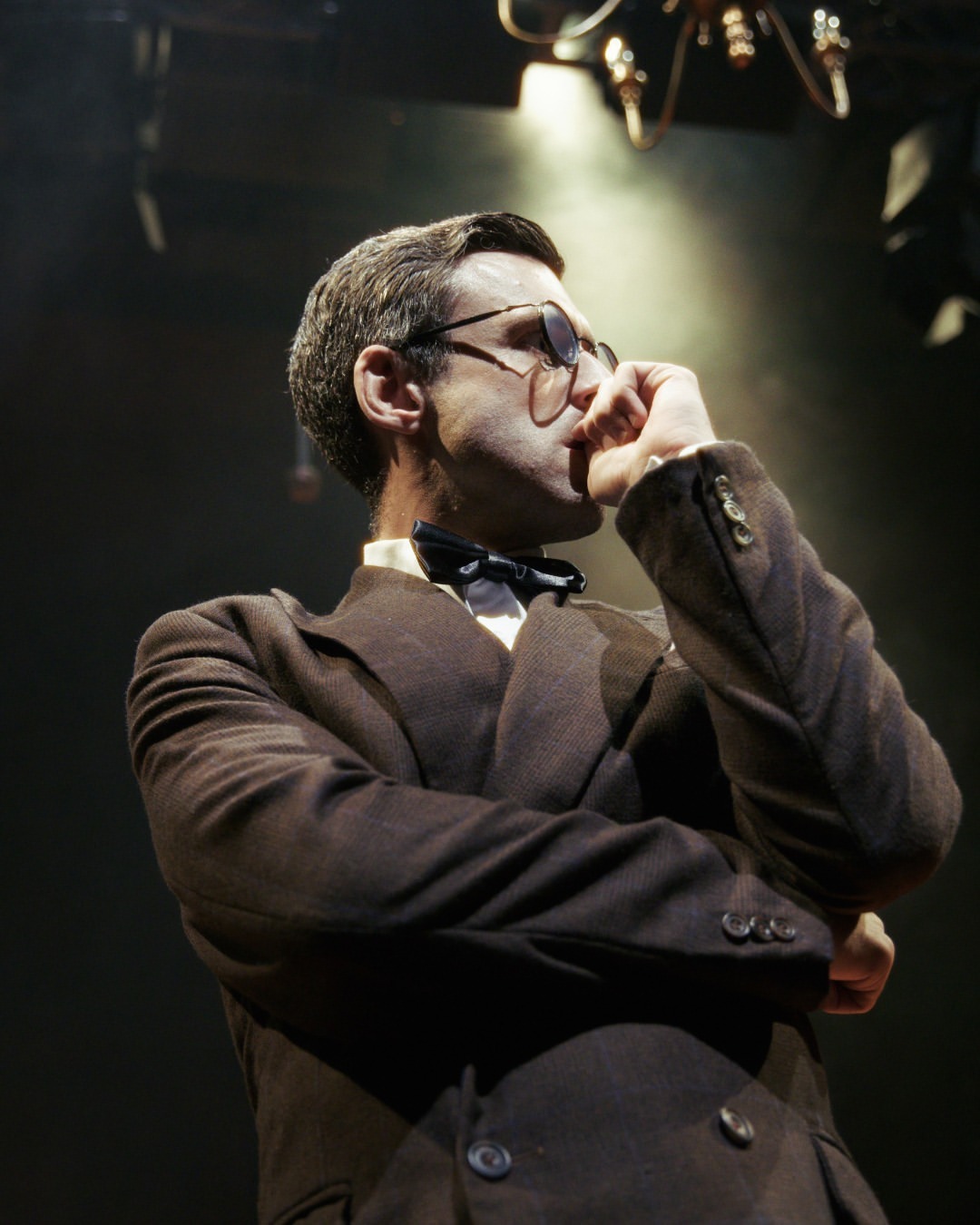
The play opens with a scene that establishes its world with quiet, unsettling precision. Shostakovich moves through the routines of his working life with the careful deliberateness of a man who has learned that every gesture is observed and every note carries consequences. There is nothing outwardly dramatic in the moment, no confrontation, no crisis, and yet the atmosphere is charged from the very first beat. A pause before answering a question, a look held fractionally too long before being withdrawn, and in those small hesitations the production signals clearly that survival in Stalin's Soviet Union was not a matter of courage or cowardice alone, but of an exhausting, daily, minute-by-minute calibration of what could be said, what could be implied, and what had to remain entirely hidden. From that moment, Holy Fool demonstrates a sure and sophisticated understanding of how tyranny operates not through grand confrontations but through the slow colonisation of the inner life.
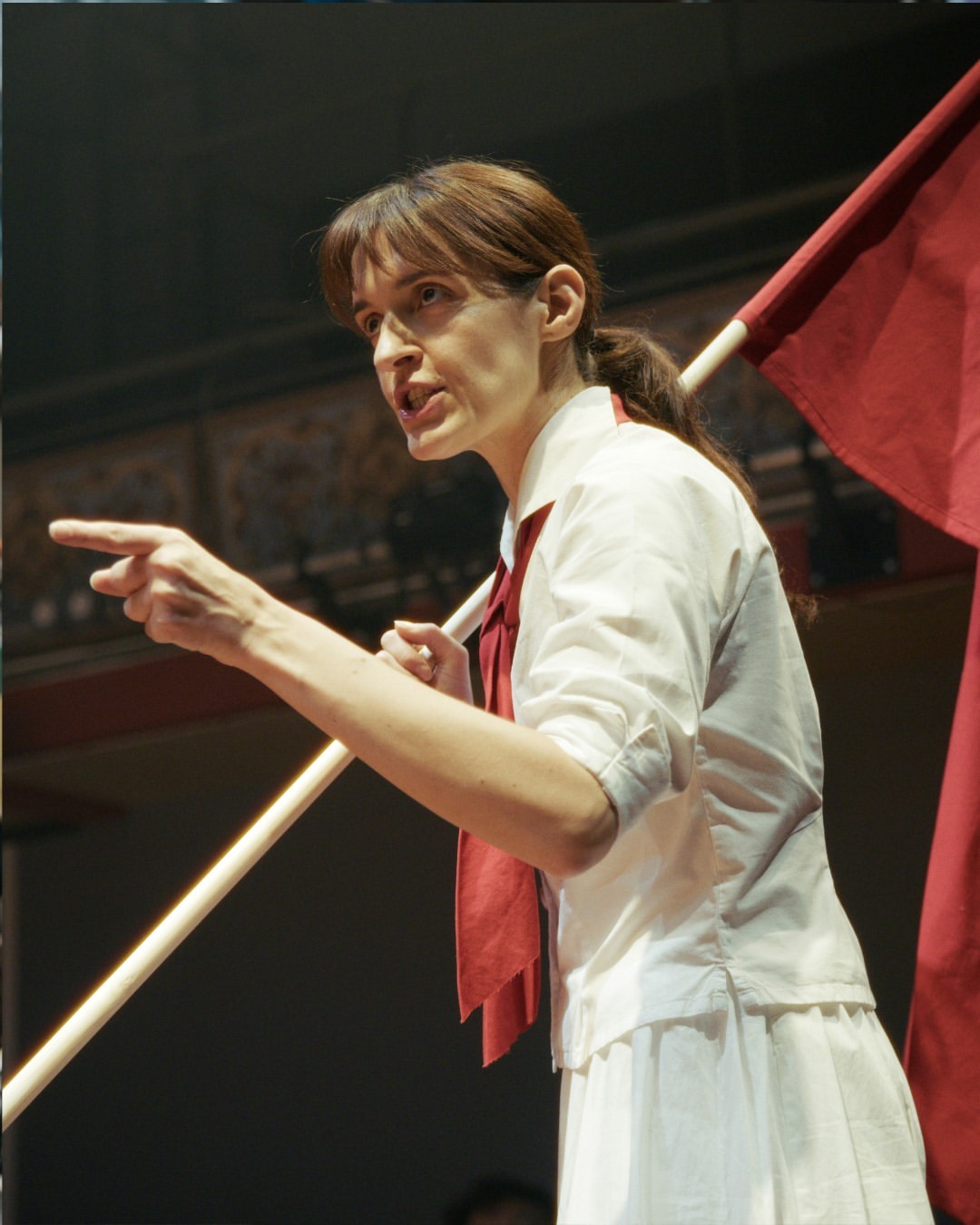
What works especially well is the intelligence and specificity of Adler and Sellers's writing. The script moves between political tension and dark wit with a naturalness that reflects a deep familiarity with its subject; the absurdity of Shostakovich's situation is never played for cheap laughs, but the comedy that emerges from it is real and pointed, rooted in the particular madness of a system that required its artists to praise the hand that threatened to strangle them. When Shostakovich reflects on his position with an observation that is simultaneously self-deprecating and devastatingly accurate, the line resonates because of everything surrounding it: The symphonies written in code, the public compliances masking private rebellion, the whole impossible balancing act of being outwardly compliant while inwardly defiant. The script consistently trusts its audience to follow the argument, which is one of the production's most admirable qualities.
The four-strong cast, Jenna Augen as Nina, Fergus O'Donnell as Izaak, Benjamin O'Mahony as Mitya, and Phoebe Pryce as Katya, perform with a collective precision that the material demands and the critics have widely noted. The ensemble feels genuinely inhabited rather than assembled for the occasion, and it is in the smaller physical details that the performances find their greatest depth. A smile maintained a beat past the point of comfort, a piece of news absorbed with a stillness that speaks volumes, a glance exchanged between characters who understand something that cannot be spoken aloud; these moments ground the production in recognisable human behaviour and give the historical material an emotional immediacy that makes it feel urgently present rather than safely distant.
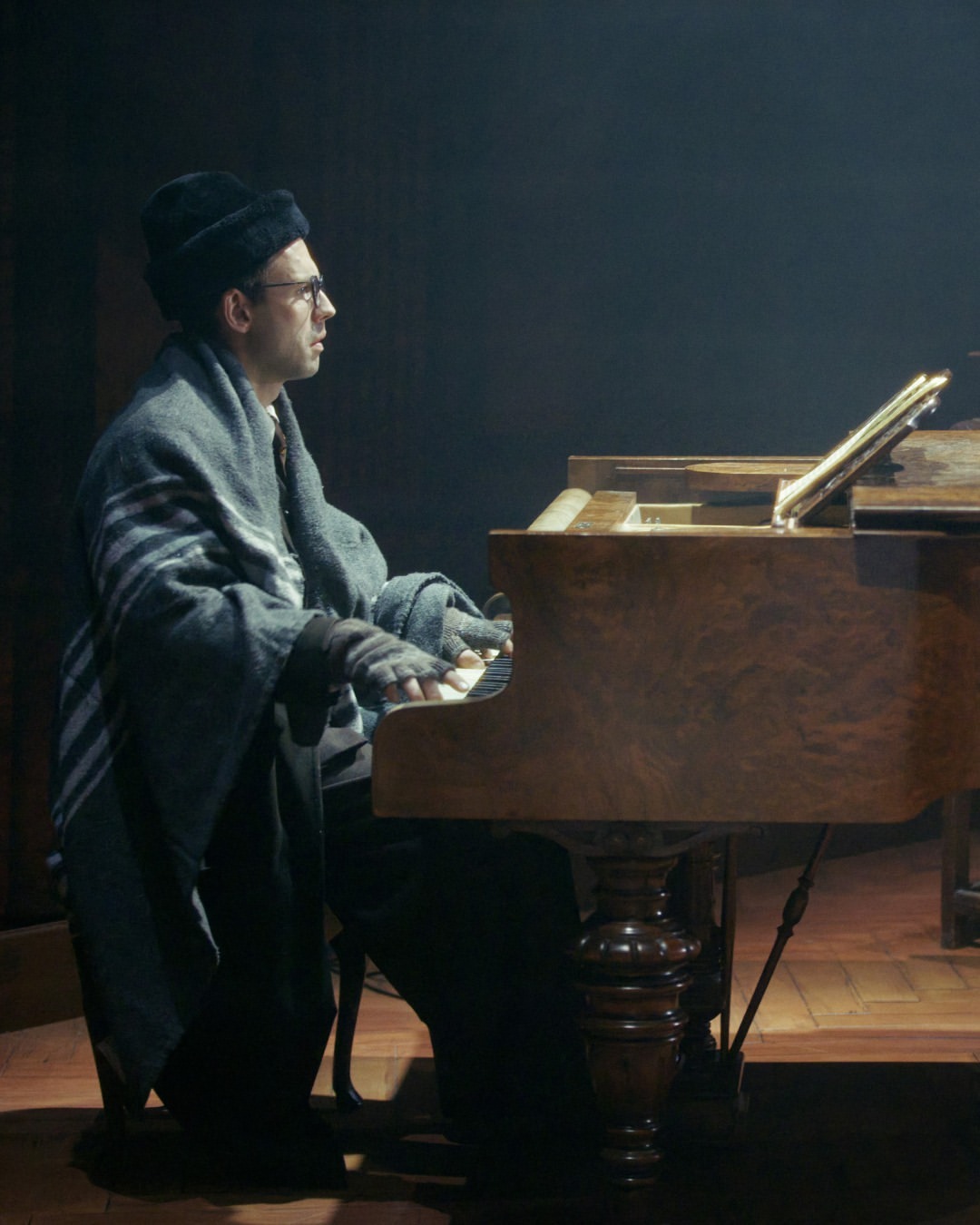
William Fricker's set and costume design places the action in a world that feels period-specific without ever becoming a museum piece, while Oliver Fenwick's lighting moves between locations and emotional registers with a subtlety that supports the storytelling rather than illustrating it. Julian Starr and Raffaela Pancucci's sound design gives the production a textural richness; the presence of music is felt throughout, sometimes as comfort, sometimes as threat, which adds considerable depth to a play about a man whose entire existence was mediated through sound.
One of Holy Fool's greatest strengths is the balance it maintains between intellectual rigour and emotional warmth. The play is genuinely interested in ideas about art and power, censorship and survival, the compromises that genius makes when genius has no choice, but it never allows that interest to cool the human story at its centre. The relationships between the characters carry real weight, and the comedy that runs through the darker passages grows from character rather than being imported for relief, which means it deepens rather than deflects the play's emotional impact.
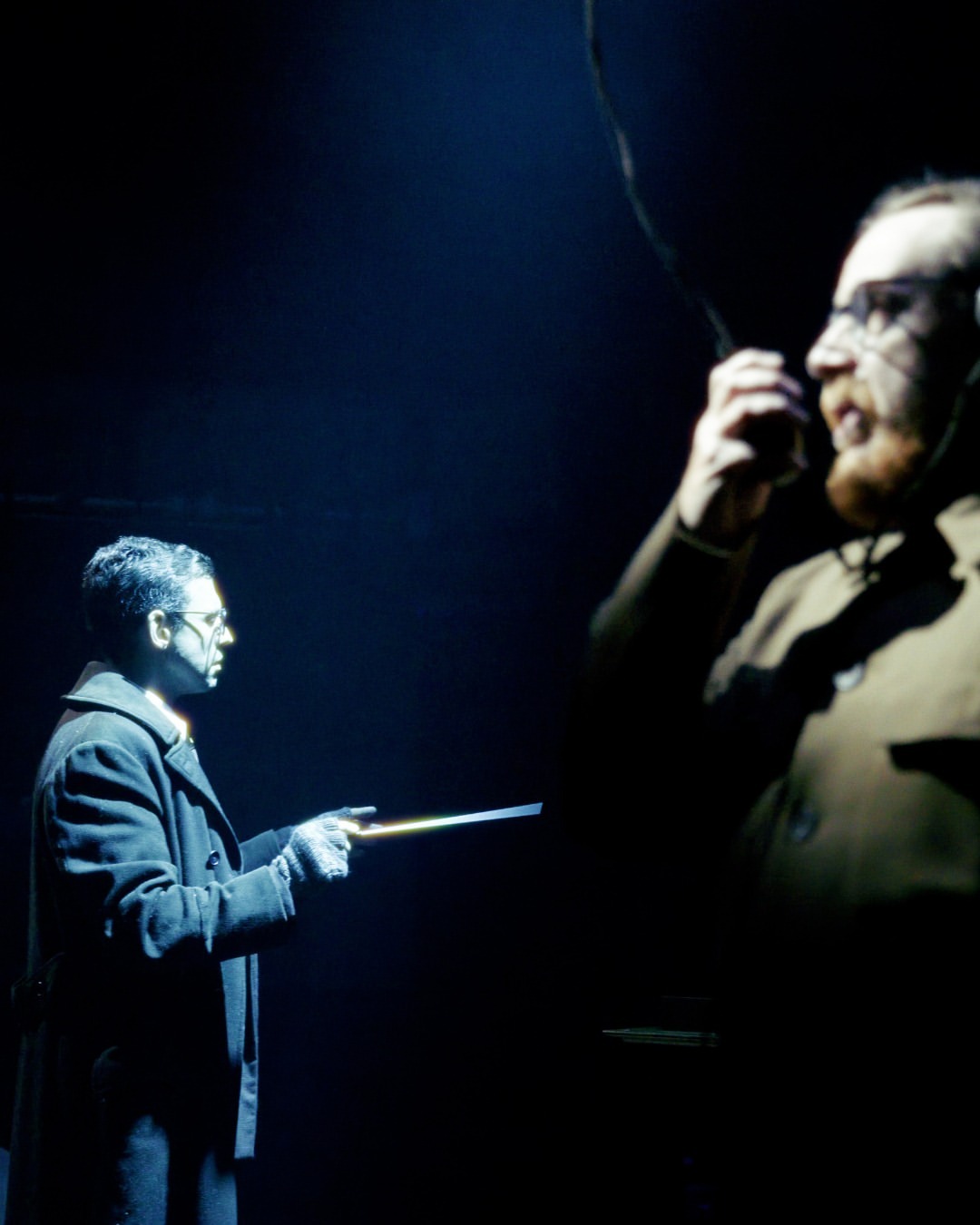
There are passages where the production slows and allows its characters to sit with the full weight of their situation, not rushing towards resolution or explanation, but simply letting the reality of their circumstances occupy the room. These are among the most valuable sequences in the two hours and twenty minutes. Kate Fahy's direction understands that the story of Shostakovich is not just a story about a composer or even about Soviet Russia, but about what happens to the human spirit when expression itself becomes dangerous, and those quieter moments are where that understanding lands most deeply.

